Does Your Ring Size Change with the Weather?
Learn how temperature, humidity, and seasonal changes affect your finger size and what you can do to ensure a comfortable fit year-round.
You might have noticed that your rings feel tighter in summer and looser in winter. You're not imagining it — weather and temperature genuinely affect your finger size. Understanding this phenomenon can help you choose the right size and maintain comfort throughout the year.
How Temperature Affects Finger Size
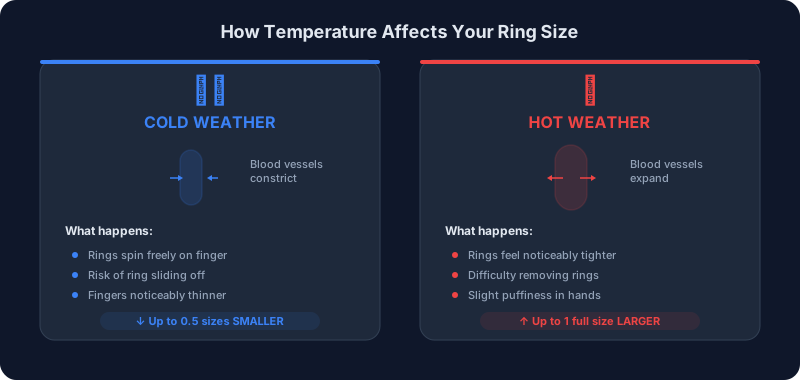
Your fingers, like the rest of your body, respond to temperature changes through a process called vasodilation and vasoconstriction.
In Hot Weather
When temperatures rise, your blood vessels expand (vasodilate) to release heat. This causes your fingers to swell, sometimes by as much as half a ring size. You might notice:
- Rings feeling tighter
- Difficulty removing rings
- Slight puffiness in your hands
- Ring marks on your finger
In Cold Weather
When it's cold, your blood vessels constrict to conserve heat. Your fingers become thinner, and you might experience:
- Rings spinning freely
- Rings sliding off easily
- Noticeably thinner fingers
- A looser fit overall
How Much Does Size Actually Change?
Research suggests that finger circumference can change by approximately 1-2 millimeters due to temperature alone. In ring size terms, this translates to about half a size (0.5 US sizes).
However, extreme conditions can cause even larger changes:
- Extreme heat or exercise: Up to 1 full size larger
- Extreme cold: Up to 0.5 sizes smaller
- High altitude: Slight swelling due to lower atmospheric pressure
- Humidity: Mild swelling in very humid conditions
What Size Should You Choose?
Given that your finger size fluctuates, here's what experts recommend:
- Measure in the evening at room temperature — this gives you a size that works most of the time
- Size for comfort — the ring should slide over your knuckle with slight resistance
- Consider your climate — if you live in a hot climate, you might want to lean toward the exact size rather than sizing up
- Think about the band width — wider bands already fit tighter, so keep that in mind alongside weather considerations
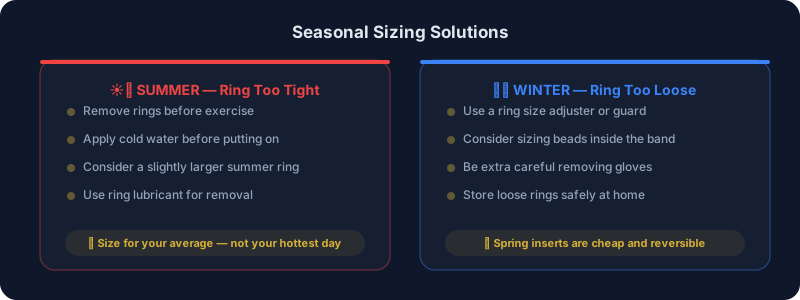
Practical Solutions for Seasonal Changes
For Summer (Ring Too Tight)
- Remove rings before exercise or hot activities
- Apply cold water to fingers before putting on rings
- Consider having a slightly larger ring for summer wear
- Use ring lubricant to help with removal
For Winter (Ring Too Loose)
- Use a ring size adjuster or guard
- Consider sizing beads inside the band
- Be extra careful when removing gloves
- Store loose rings safely rather than risking loss
When Seasonal Changes Are a Real Problem
If you find that temperature changes make your ring unwearably tight or dangerously loose, consider these options:
- Get two rings in slightly different sizes for different seasons
- Use adjustable solutions like sizing beads or spring inserts
- Choose a middle-ground size that's wearable year-round with minor adjustments
The Bottom Line
Your ring size is not a fixed number — it's a range. Understanding how weather affects your fingers helps you make smarter sizing decisions. When in doubt, measure during moderate conditions and choose a size that feels comfortable with a slight bit of room to account for natural swelling.
Need to check your current size? Use our ring size calculator for instant conversions across all major sizing systems.